

California homeowners need more from a roof than basic weather protection. In Los Angeles, long sun exposure, high roof surface temperatures, cooler nights, and strict energy standards all affect what kind of roofing system makes sense. Foam Roofing Los Angeles works with homeowners who want a roof that improves comfort, supports lower cooling demand, and fits California’s modern performance expectations. When spray polyurethane foam is paired with a white silicone coating, the result is not just a sealed roof surface. It is a roof assembly designed to reflect heat, resist heat transfer, and perform better in a climate where roof temperature has a direct effect on indoor comfort and utility bills.
Why California Homeowners Need a Different Roofing Conversation
A generic insulation discussion does not help most California homeowners make a roofing decision. In this state, especially in Southern California, the important questions are more specific. Homeowners need to know how a roof handles solar exposure, how cool-roof ratings are verified, how California energy rules treat reflective roofing materials, and how the system affects comfort during both hot days and cooler evenings. That is why spray foam roof insulation should be evaluated as part of a full cool-roof assembly rather than as insulation alone.
Cool California explains that cool roofs can cool a home, reduce energy use, and provide financial benefits for homeowners. The California Energy Commission also explains that when cool roofs are installed, the roofing product’s solar reflectance and thermal emittance must be tested and certified according to Cool Roof Rating Council procedures. For homeowners, that means the roof decision should be based on verified product performance, not just broad claims about energy savings.
Contact Us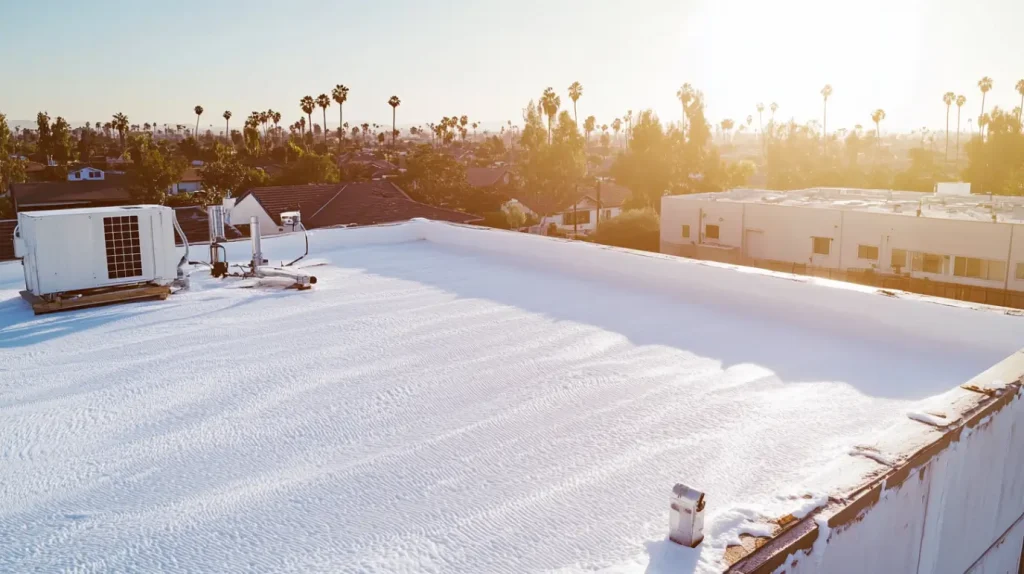
How SPF Roofing Supports Home Comfort
Spray polyurethane foam helps homeowners by creating a continuous insulated layer across the roof. That matters because many roofs do not lose efficiency across large open areas alone. They lose performance at seams, penetrations, transitions, edge conditions, and small irregularities that allow more heat movement than expected. SPF reduces this problem by expanding into a seamless layer that conforms to the roof’s actual shape.
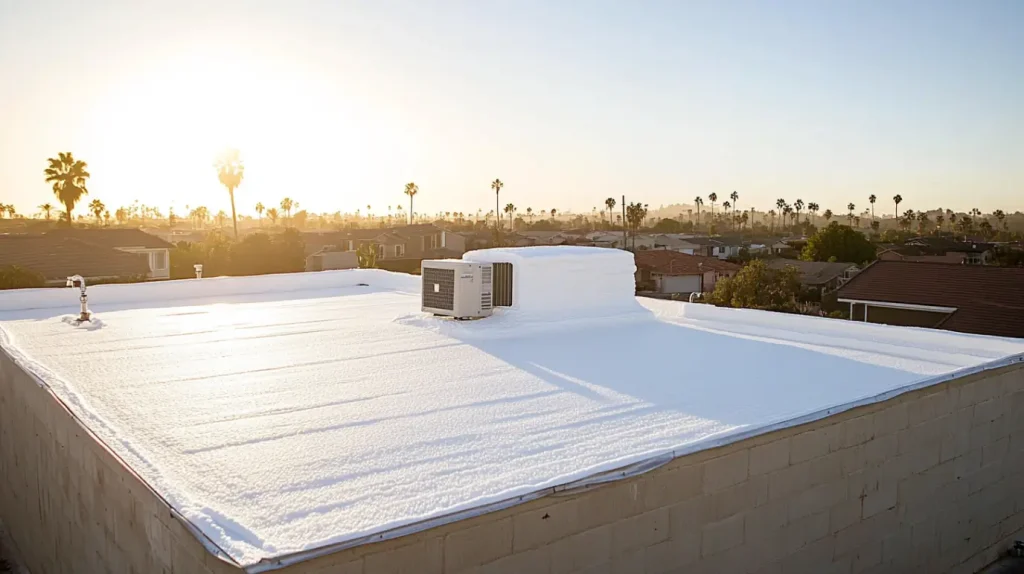
For California homeowners, this means the roof can do two jobs at once. The foam layer helps slow heat transfer through the roof assembly, while the white silicone coating above it helps reduce how much solar heat the roof absorbs in the first place. On hot days, that helps reduce heat build-up at the roof surface. During cooler periods, the insulated foam layer helps the building retain conditioned indoor temperatures more effectively. That combination is one of the main reasons SPF roofing performs well in Los Angeles homes where comfort issues are often caused by both excessive daytime heat gain and weak thermal control after sunset.
Why the White Silicone Coating Matters
Many homeowners hear about spray foam and focus only on the insulation layer. In California, that misses half the value of the system. The top coating is critical because it is the exposed surface that interacts with sunlight, heat, and weather. A white silicone coating is commonly used because it helps maintain a bright, reflective surface while protecting the foam beneath.
That coating supports cool-roof performance by reflecting more sunlight and releasing absorbed heat more effectively than darker, less reflective roof surfaces. This matters in Los Angeles because the roof is often the part of the home under the most intense solar load. A roof that stays cooler at the surface places less heat stress on the structure below it. That can improve comfort and reduce the burden on air conditioning equipment, especially in homes with older roof assemblies or limited attic and ceiling insulation performance.
How to Read a CRRC Label
California homeowners do not need to become code specialists, but they should know how to read the basic information on a Cool Roof Rating Council label. The California Energy Commission’s residential compliance manual shows that the sample CRRC product label includes solar reflectance and thermal emittance values. The CRRC also explains that its product labels convey the rated radiative performance of a specific roofing product.
When looking at a CRRC-rated product, the most important items are:
Solar Reflectance
Solar reflectance describes how much sunlight the roof surface reflects away. Higher reflectance generally means less solar heat is absorbed at the roof surface. For a California homeowner, this is one of the most important numbers on the label because it directly affects how much heat the roof takes on during long sunny periods. The CRRC roof directory lists both initial and 3-year aged values, which matters because performance over time is more useful than a brand-new number alone. See the official CRRC product label guidance.
Thermal Emittance
Thermal emittance describes how effectively the roof releases absorbed heat. A roof can reflect a large amount of sunlight, but thermal emittance still matters because it affects how efficiently any absorbed heat is released back to the environment. In practical terms, homeowners should want a roofing surface that not only reflects strongly, but also gives up heat efficiently instead of holding it.
SRI
SRI stands for Solar Reflectance Index. It is a calculated value based on solar reflectance, thermal emittance, and roof conditions such as slope under the applicable methodology. The California Energy Commission and CRRC materials explain that SRI is used as an alternative compliance pathway in some situations because it combines reflectance and emittance into a single indicator of how hot a roof is likely to become in the sun. Higher SRI generally indicates better ability to limit heat transfer into the building.

What Initial and Aged Ratings Mean
Homeowners often notice that CRRC data includes both initial and aged values. That distinction is important. Initial ratings describe the product when new. Aged ratings describe performance after exposure over time under CRRC procedures. California compliance materials specifically reference aged solar reflectance and thermal emittance values for cool-roof evaluation and compliance pathways. For a homeowner comparing options, aged values often give a better picture of how the roof is expected to perform after it has been exposed to real weather conditions rather than only when it leaves the factory.
What Title 24 Means for Homeowners
Title 24 is California’s Building Energy Efficiency Standards framework. Homeowners do not need to memorize the code language, but they should understand the practical effect. Roof replacement and roof-related improvements in California are shaped by energy-efficiency requirements that take cool-roof performance seriously. The CRRC’s California Title 24 resource notes that the 2025 Energy Code includes updates related to mandatory SRI calculation requirements and prescriptive requirements for certain multifamily roofing products, while the California Energy Commission’s compliance materials continue to tie cool-roof evaluation to verified CRRC-tested properties.
For a homeowner, that means the right roof proposal should account for more than leak repair. It should also consider whether the roof assembly supports the cool-roof and energy-performance goals relevant to the project. That is one reason SPF plus a white silicone coating is so relevant in California. It addresses insulation, air sealing, and solar reflectivity within one coordinated system. See the California Energy Commission’s Single-Family Residential Compliance Manual.
How SPF Plus White Silicone Can Affect Bills
No roofing contractor should promise the same savings for every home, because actual results depend on roof condition, home design, existing insulation, HVAC efficiency, thermostat settings, and solar exposure. But the mechanism is straightforward. A cooler roof surface reduces the amount of heat entering the building during the day, while the foam layer reduces unwanted heat transfer overall. That can reduce cooling demand and support more stable indoor temperatures.
Cool California also points homeowners to a roof savings calculator developed with Oak Ridge National Laboratory, Lawrence Berkeley National Laboratory, the U.S. Department of Energy, and the EPA to estimate annual energy savings from cool-roof retrofits. That reinforces the practical point: cool-roof performance is not just theoretical. It is connected to real operating costs, and the roof surface characteristics matter.
Why This Matters More on Older Los Angeles Homes
Older homes in Los Angeles often have roof assemblies that were never designed around today’s energy expectations. They may have dark surfaces, aging materials, patch repairs, weak detailing, or roof sections that absorb too much heat throughout the day. In these homes, comfort complaints are often most noticeable in upper rooms and spaces directly below the roof.
An SPF roofing system with a white silicone coating can be especially useful in this situation because it treats the roof as a full performance system. Instead of relying on separate layers and multiple seams, the foam creates a seamless insulated base and the coating provides the reflective top surface that California homeowners need in a sun-heavy climate. The result is often better thermal stability, improved comfort, and a roof assembly that is easier to evaluate against cool-roof performance standards.
When a Homeowner Should Ask for an Inspection or Estimate
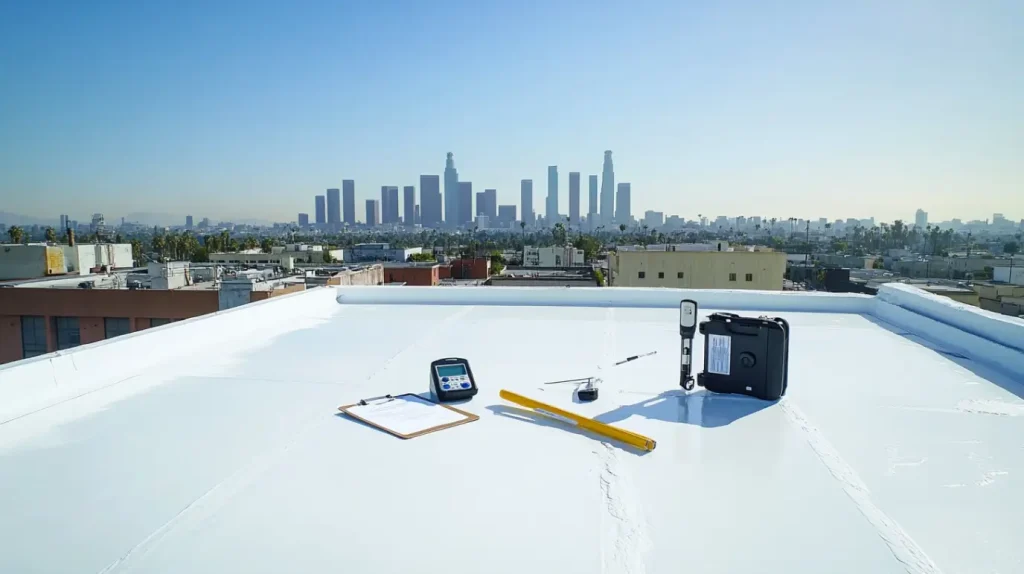
A homeowner should ask for a roof inspection or estimate when the house feels hotter than it should in the late afternoon, when upstairs spaces are harder to cool, when the current roof has an aging dark surface, or when a reroof project is already under consideration. The same applies when a homeowner wants clarity on whether a proposed roofing product is actually CRRC-rated and how to compare one reflective system against another.
This is also the right time to ask very specific questions. What are the product’s aged solar reflectance and thermal emittance values. Is there an SRI value available. Is the coating system listed in the CRRC directory. How does the roof design affect comfort and cooling demand on this particular home. Those are the questions that turn a broad roofing conversation into a useful California-specific recommendation. (Cool Roof Rating Council)
CONCLUSION
Spray foam roof insulation supports California homeowners best when it is understood as part of a full cool-roof system. In Los Angeles, that means combining the insulating value of SPF with the reflective performance of a white silicone coating so the roof can reduce heat absorption, resist heat transfer, and support lower cooling demand. CRRC labels, solar reflectance, thermal emittance, and SRI are not abstract technical details. They are practical tools that help homeowners compare roofing options with more confidence and understand how California energy standards apply to real roof decisions. Schedule a Free Roof Assessment to review your current roof, compare cool-roof options, and get a project estimate based on verified product performance and your home’s actual conditions.
Read also our blog: Why Spray Foam Insulation Is a Smart Choice for Your Roof
FAQ
What should a California homeowner look for on a CRRC roof label?
The most important items are the product’s solar reflectance and thermal emittance values, along with whether aged values are available. These numbers help show how well the roofing product reflects sunlight and releases heat.
What does SRI mean on a cool roof product?
SRI means Solar Reflectance Index. It is a calculated value based on solar reflectance, thermal emittance, and the applicable method used to estimate how hot the roof will get in the sun. Higher SRI generally indicates better cool-roof performance.
Why is SPF often paired with a white silicone coating in Los Angeles?
The foam provides a seamless insulated layer that helps reduce heat transfer, while the white silicone coating provides the reflective cool-roof surface that helps reduce solar heat absorption. Together, they support comfort and can reduce cooling demand in a hot, sun-exposed climate.
Mail us for information
Emergency Phone