
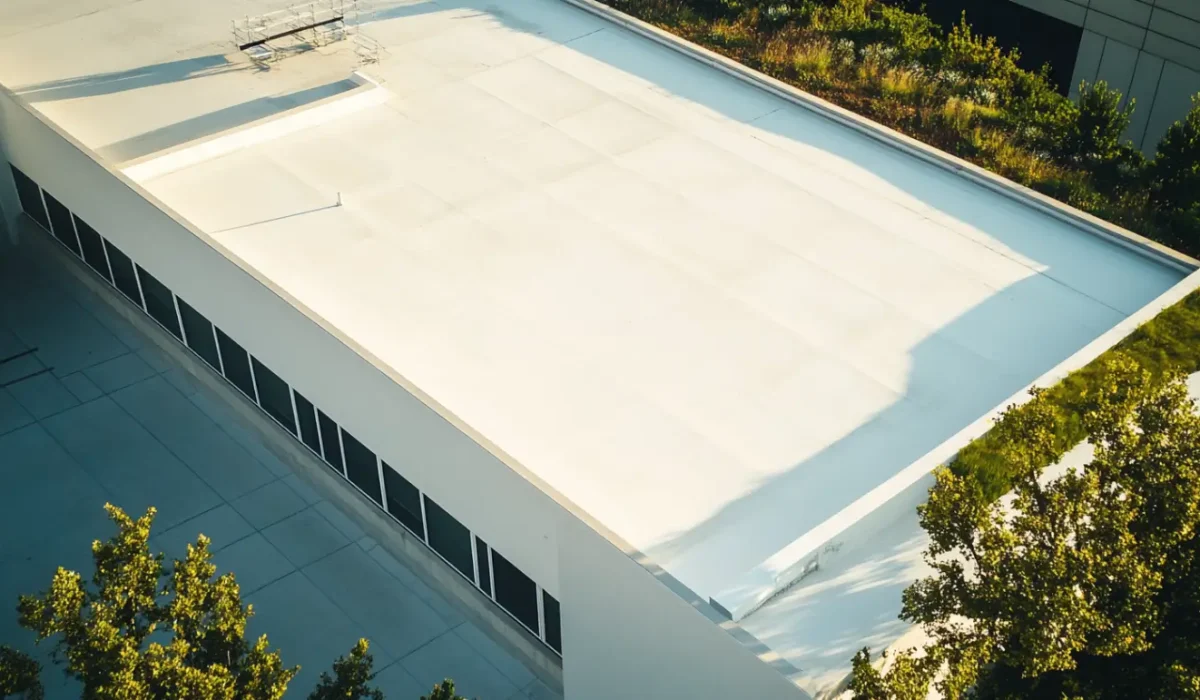
For commercial owners and managers weighing flat-roof options, Foam Roofing Los Angeles often recommends spray polyurethane foam roofing because it can solve multiple roofing challenges in one system. SPF is spray-applied as a liquid that expands into a fully adhered foam layer, then sealed with a protective elastomeric coating to shield it from UV exposure and weather. When installed and maintained correctly, it creates a seamless roofing surface that adds insulation, improves waterproofing performance, and supports long-term value.
What an SPF Commercial Roofing System Actually Is
An SPF commercial roof is not just foam sprayed across a roof deck. It is a complete roofing assembly. The foam is applied directly to a prepared substrate, where it expands and forms a monolithic surface without field seams. It is then protected with a coating system, commonly silicone, acrylic, polyurethane, or a specified combination based on climate, foot traffic, exposure, and warranty requirements.
In commercial applications, SPF can serve multiple functions at once. It helps create a seamless roof surface, adds insulation, reduces uncontrolled air movement, and addresses many of the weak points that often develop around seams and transitions in sheet-based roofing systems. It does not eliminate the need for proper drainage, substrate preparation, or ongoing maintenance, but when those factors are handled correctly, SPF can become a durable, renewable roofing asset.
Why SPF Is a Strong Fit for Commercial Flat and Low-Slope Roofs
Seamless waterproofing over complex roof layouts
Commercial roofs rarely fail only in open field areas. Leaks and long-term issues usually appear around penetrations, curbs, drains, parapets, flashing transitions, and rooftop equipment. SPF is especially useful on complex commercial roofs because it is spray-applied and seamless, allowing it to conform more easily around irregular geometries than many sheet systems. That reduces reliance on a large number of field seams and attachments that can become maintenance liabilities over time.
Added insulation and thermal continuity
SPF is also valuable when a building needs more than leak protection. Many commercial owners want to improve thermal performance while addressing roof age at the same time. Because SPF is applied in place, thickness can be adjusted to add insulation and improve slope where needed. This matters most on warehouses, retail properties, office buildings, and multi-unit properties with large roof areas and high solar exposure. On these buildings, roof performance affects not just watertightness, but cooling load, comfort near the ceiling plane, HVAC runtime, and long-term budgeting.
Excellent retrofit potential on recoverable roofs
SPF is often selected when an owner wants to avoid a full tear-off and the existing roof can be properly evaluated, repaired, dried, and prepared for recovery. In many retrofit situations, SPF can be installed over a suitable existing substrate, which may reduce demolition, disposal, and disruption compared with a full replacement. That benefit depends entirely on roof condition. Wet insulation, deteriorated deck sections, or major structural issues can eliminate recovery as an option.
Which Commercial Building Types Benefit Most From SPF
Warehouses and distribution buildings
Warehouses often have large roof spans, long operating hours, and major exposure to heat gain. SPF can help improve insulation continuity while reducing leak exposure across a large footprint. It is especially effective where the roof contains many penetrations, rooftop units, skylight curbs, or irregular transitions.
Even a small leak on a warehouse roof can threaten inventory, electrical systems, racking, and operations. That is one reason many owners value SPF not only for energy performance, but for the ability to renew the roof through recoating instead of assuming every aging cycle will require another tear-off.
Retail properties and shopping centers
Retail roofs protect more than structure. They affect tenant comfort, operating hours, storefront conditions, and customer experience. SPF can be a strong fit where project phasing and reduced disruption matter, especially on roofs with many penetrations and mechanical details. Proper planning is essential because odor management, overspray control, and weather conditions still need to be managed carefully.
Office buildings
Office buildings often bring complaints tied to comfort, indoor temperature swings, and cooling demand. SPF may be a strong option when ownership wants to improve watertightness and thermal performance in a single project. It is also useful where drainage irregularities can be improved through targeted foam application instead of being left unaddressed beneath a new membrane surface.
Multi-unit and mixed-use properties
Multi-unit properties require careful planning because they involve many occupants and little tolerance for disruption. SPF can be a good fit where management wants to reduce tear-off-related disruption, improve insulation value, and support a long-term maintenance strategy. Overspray containment, pedestrian safety, vehicle protection, and coordination around air intakes all remain important.
When SPF Is the Right Choice and When It Is Not
Conditions that make SPF a strong commercial fit
SPF is often a strong choice when the roof is low-slope, the building would benefit from added insulation, the roof has many penetrations or difficult transitions, and the existing assembly may be a candidate for recovery rather than full removal. It is also attractive when the owner wants a renewable roof strategy in which future capital planning focuses more on recoating and repairs than repeated full-system replacement.
SPF becomes even more compelling when drainage can be improved with shaped foam application and when ownership is committed to maintaining the protective coating over time.
Conditions that make SPF less suitable
SPF is not the right answer for every building. It may be a poor candidate when the roof is severely wet, structurally compromised, unstable, or affected by unresolved deck problems. It can also be less suitable when overspray risk is unusually high or when there is no realistic plan for protecting the roof from chronic traffic abuse.
It is also a weaker fit for owners who expect to ignore maintenance after installation. SPF depends on the long-term condition of the coating. If the coating is neglected, the roof may still be repairable, but one of SPF’s biggest advantages, renewability through planned maintenance and recoating, is reduced significantly.
The Technical Factors Commercial Owners Should Evaluate Before Choosing SPF
Existing substrate condition
The substrate is one of the first decision points. A recover project only works when the underlying roof is dry enough, sound enough, and properly attached to support a new system. Trapped moisture, widespread delamination, deteriorated deck sections, or major structural movement can shift the recommendation from recover to tear-off and replacement. Renewal guidance for SPF systems emphasizes inspection first because preparation depends on actual roof condition, component integrity, and the type of existing protective surface.
Drainage and slope
SPF is often praised for being seamless, but seamless does not eliminate the need for positive drainage. Ponding risk, drain layout, scupper performance, low areas, and slope transitions still need review. One of SPF’s practical strengths is that it can be built up selectively to improve slope in localized areas, but serious drainage failures still require careful assessment.
Coating selection and exposure conditions
The coating is not just cosmetic. It is the weathering surface that protects the foam from UV and environmental exposure. Different coatings perform differently in terms of reflectivity, weather resistance, dirt pickup, impact resistance, and ponding tolerance. Specifications for SPF systems commonly require approved coating systems with defined coats and thicknesses, which is why coating selection plays such a large role in long-term roof performance.
Foot traffic and rooftop use
If the roof supports regular service traffic, solar maintenance, or frequent mechanical access, that affects detailing and long-term wear. SPF can perform well on active commercial roofs, but it should be designed and maintained for real use. Walk pads, protected service paths, and reinforced attention around heavily used areas are important.
Wind, fire, and code-related approvals
Commercial owners also need to confirm that the proposed assembly meets wind uplift, fire classification, and insurer requirements. In practice, the “system” is not just spray foam. It is the approved combination of substrate preparation, foam, coating, and detail work.
How SPF Compares Strategically to Other Commercial Roof Systems
SPF is often compared with single-ply membranes, modified bitumen, and other commercial flat roofing systems. Its main advantage is that it combines seamless waterproofing coverage and insulation value in one spray-applied assembly. That makes it especially appealing for owners trying to address several roofing concerns at once, including leaks, heat gain, drainage irregularities, and aging roof conditions.
Other systems may still be the better fit when a project calls for different traffic durability, installation methods, or assembly characteristics. The right choice depends on the building’s condition, operational demands, budget priorities, and long-term maintenance strategy.
Repair vs. Restore vs. Replace: The Decision Framework Owners Need
This is one of the most important commercial roofing decisions because the wrong choice can waste capital either way. Some owners replace roofs that are still solid restoration candidates. Others spend on recoating when the assembly has already moved beyond responsible renewal.
When localized repair makes sense
Localized repair is usually appropriate when the roof remains broadly serviceable and the issues are limited in scope. Examples include isolated punctures, impact damage, flashing defects, coating erosion in specific areas, or localized penetration-related issues. In these situations, the goal is to correct the defect and preserve the remaining value of the roof system.
Owners in this position should usually move toward Foam Roof Repair rather than jump immediately to restoration or full replacement.
When restoration or recoating is the smarter investment
Restoration or recoating is often the best option when the SPF roof still has a sound foam base but the protective coating is thinning, weathering, or nearing the end of its service interval. This is one of the main life-cycle advantages of SPF. If the underlying foam remains intact and moisture conditions are manageable, recoating can extend service life at a lower cost than replacement.
That is typically the right path when deterioration is primarily at the coating level, the foam remains well-bonded, and the roof still has enough integrity to justify renewal. This path naturally connects to Foam Roof Maintenance and Foam Roof Restoration.
When full replacement is the responsible answer
Full replacement becomes necessary when roof problems are no longer limited to the surface. Widespread trapped moisture, major substrate deterioration, structural concerns, systemic leak patterns, or drainage failures that cannot be corrected economically through restoration are all signs that replacement may be the responsible choice.
Replacement is not simply the most expensive option. It is the right option when additional surface work would only delay a deeper failure and increase total ownership cost.
SPF Commercial Roofing Cost Drivers: What Actually Changes the Number
Commercial owners often ask for a square-foot price first, but that does not tell the full story. SPF roofing cost depends on the work scope, the condition of the existing roof, and the performance goals of the finished system.
Existing roof condition and preparation scope
Preparation is a major cost driver. A relatively clean, dry, recoverable roof is very different from a roof that needs wet insulation removal, deck repairs, major flashing rebuilds, or extensive cleaning and priming.
Foam thickness and tapering requirements
The amount of foam used affects both cost and performance. More thickness generally means more insulation value and more material. Localized tapering to improve slope also adds scope. Cutting thickness may reduce initial cost, but it may also reduce thermal performance and long-term value.
Coating type, mil thickness, and surfacing details
Coating choice materially affects both price and service interval. More robust coating packages may raise first cost, but they can also improve wear resistance and extend the time before recoating is needed.
Roof complexity
A roof with many penetrations, curbs, supports, and transitions can still be a strong SPF candidate, but complexity increases labor and detailing time.
Occupancy constraints and phasing
Occupied retail, office, mixed-use, and tenant-heavy buildings often require tighter scheduling, more site protection, and more careful phasing around operations. These factors affect execution cost even when the core roof system remains the same.
Life-Cycle Value: Why SPF Is Often Evaluated Differently Than Other Roof Systems
SPF should be evaluated on life-cycle value, not just upfront installation price. One of its biggest advantages is that a properly maintained SPF roof may be renewed through recoating rather than discarded in a full tear-off replacement cycle. If the foam core remains sound, that changes long-term budgeting, reserve planning, and capital forecasting.
The energy side also matters. SPF roofs commonly use reflective coatings that can contribute to cool-roof performance, while the insulation and air-sealing benefits may help reduce heat transfer through the roof assembly. On large commercial buildings in hot climates, that can affect operating cost in a meaningful way.
This is where SPF often becomes more attractive over time than it appears at bid stage. Owners are not just buying a roof surface. They may be buying a more renewable system, better thermal continuity, and a maintenance strategy that spreads capital more intelligently over the life of the building.
Project Planning, Occupant Disruption, and Downtime Expectations
Commercial roofing projects perform better when the scope is defined before mobilization. For SPF, that means evaluating moisture conditions, substrate suitability, drainage, access, overspray risk, rooftop details, and coordination with facilities teams.
SPF projects can often be phased to reduce operational disruption, but reduced disruption is not the same as no impact. Owners should expect coordination around HVAC shutdowns when needed, temporary access limits, protection for vehicles and adjacent surfaces, and communication with tenants or staff near work zones.
Weather also matters. SPF is a field-applied system, so wind, moisture, temperature, and timing influence quality and production. Experienced planning is critical, especially on occupied commercial properties.
Inspection Frequency, Maintenance Expectations, and Recoating Planning
Well-managed SPF roofs should be inspected at least twice a year and after major weather events or unusual rooftop activity. Regular inspections help identify coating wear, punctures, flashing damage, drainage issues, and exposed foam before minor issues become larger failures.
Routine maintenance typically includes debris removal, drain and scupper checks, flashing review, monitoring traffic-related wear, and prompt repair of minor damage. The common commercial mistake is not that roofs wear over time. The mistake is allowing small maintenance issues to turn into leak events or substrate problems.
Recoating is central to SPF longevity. Existing SPF roofs commonly require recoating based on weathering, coating thickness, and manufacturer requirements. When recoating is done on time, owners preserve the foam layer and extend service life much more cost-effectively than waiting until deterioration becomes widespread.
Warranty Considerations: What Commercial Owners Should Pay Attention To
A roofing warranty should never replace a real understanding of the roof system. Owners should review what is covered, who issues the warranty, what maintenance is required to keep it valid, and which exclusions apply.
In practical terms, commercial owners should pay attention to whether the warranty is material-only, labor-and-material, or system-based; what inspection schedule is required; whether coating renewal is expected; and how unauthorized penetrations, ponding, rooftop abuse, or third-party work may affect coverage.
The best warranty is the one that aligns with how the building will actually be used and maintained.
Common Commercial Flat-Roof Problems SPF Can Help Solve
SPF is especially useful when a building suffers from recurring seam vulnerabilities, hard-to-flash penetrations, surface irregularities, insufficient insulation at the roof line, or localized drainage problems that may be improved with shaped application. It can also be a strong option when ownership wants to preserve value in an existing roof that still has a recoverable base.
That said, SPF is not a cure for poor drainage design, ignored maintenance, or structural neglect. It performs best when it is matched to the real condition and needs of the building.
Get a Quote for Your Commercial SPF Roofing Project
If you are evaluating SPF for a warehouse, retail property, office building, or multi-unit property, the most important next step is a professional roof assessment based on actual roof condition, not assumptions. Commercial roofing decisions become expensive when owners move forward without a clear understanding of moisture risk, substrate condition, drainage performance, coating wear, and whether the existing roof is a better candidate for repair, restoration, recoating, or a new SPF system.
Our team will assess the roof in detail and help determine whether your building is best suited for Polyurethane Foam Roofing, targeted Foam Roof Repair, ongoing Foam Roof Maintenance, or Foam Roof Restoration. The goal is to identify the most practical and cost-effective solution for your building, your operations, and your long-term budget.
If you are planning a commercial roofing project and want clear guidance backed by real roof conditions, contact us today to discuss your property. Get a Quote Now and find out whether SPF is the right solution for your commercial roof.
Conclusion
SPF commercial roofing systems are most valuable when they are understood as long-term building assets rather than just another low-slope roofing option. Their biggest strengths are seamless application, insulation value, retrofit flexibility, and renewability through recoating. Their biggest limitations are equally important: they rely on proper substrate evaluation, drainage planning, coating protection, and timely maintenance.
For owners and property managers, the better question is not simply whether SPF can be installed. It is whether the building is best served by repair, restoration, or replacement, and whether SPF is the right long-term fit for that decision. When it is matched correctly to the building, budget horizon, and maintenance plan, SPF can be one of the most effective commercial roofing systems available.
Read also our blog: How Spray Foam Roof Insulation Supports California Homeowners
Frequently Asked Questions
Is SPF roofing a good option for an occupied commercial building?
Yes, it often is, especially when the roof is a valid recover candidate and ownership wants to reduce disruption associated with full tear-off work. SPF can be phased around operations and is especially useful on buildings with many penetrations and irregular rooftop details. The key is planning. Overspray control, weather windows, air-intake coordination, site protection, and tenant communication all need to be addressed before work begins.
How do we know whether our existing commercial roof needs repair, recoating, or full replacement?
The answer depends on condition, not age alone. Repair is often appropriate when damage is localized and the roof remains broadly serviceable. Recoating or restoration is often the right move when the foam base is still sound but the coating is weathered and nearing renewal. Full replacement is usually necessary when there is widespread trapped moisture, major substrate failure, structural concern, or drainage problems that make surface renewal a poor investment.
How long can an SPF commercial roof last?
The service life of an SPF roof depends heavily on coating protection, inspection frequency, traffic exposure, repair response time, and whether recoating is performed before deterioration becomes severe. Its long-term advantage is that the foam layer may remain in service while the protective surface is renewed. That does not make it maintenance-free. Longevity comes from inspections, timely repairs, on-schedule recoating, and preventing water intrusion before it compromises the system.
Mail us for information
Emergency Phone