

Spray foam roofing raises specific concerns in Los Angeles because the roof has to perform under intense sun, long dry periods, seasonal storms, and the heat load common across Southern California. At Foam Roofing Los Angeles, the questions we hear most often are not abstract ones. Property owners want to know how ultraviolet exposure affects the coating, how often maintenance is needed, whether ponding water is a problem, how overspray is controlled, whether a foam roof can support California cool roof requirements, and what a warranty actually covers. Those are the questions that matter when the goal is to keep a roof watertight, efficient, and repairable for the long term.
How Does UV Exposure Affect a Spray Foam Roof?
UV exposure is one of the biggest factors in the life of a spray foam roof in Los Angeles. Spray polyurethane foam cannot be left exposed to the sun. It must be protected by a coating system, typically silicone or acrylic, because the coating is what shields the foam from sunlight, weathering, and surface erosion.
When that protective surface starts to wear down, the roof can begin to show early warning signs such as chalking, cracking, thinning in high-traffic areas, or visible foam at edges and penetrations. In Southern California, this matters more than in milder climates because the roof may face intense sun for most of the year. A roof that still looks serviceable from the ground can already be losing coating thickness in critical areas, which is why timely inspection is important.
Reflective roof surfaces are also relevant in hot climates because they can stay significantly cooler than darker roofs under the same conditions. The U.S. Department of Energy notes that reflective roofing can remain more than 50 degrees Fahrenheit cooler in direct sun, which is one reason white roof coatings are so common on low-slope buildings in this region. Cool roofs are designed to reflect more sunlight and reduce heat absorption, which can support indoor comfort and reduce cooling strain.

How Often Does a Spray Foam Roof Need Maintenance?
A spray foam roof is not a roof that should be ignored until a leak appears. It is a maintainable system. That is one of its strengths, but it also means owners need to think in terms of upkeep, not just installation.
In most cases, the roof should be inspected regularly for coating wear, mechanical damage, drain blockages, sealant failure around penetrations, and signs of moisture intrusion. Rooftops with HVAC traffic, service equipment, or recurring debris buildup usually need even closer attention because localized wear tends to show up first around access points and equipment zones.
For many buildings, an annual inspection is a practical schedule. That gives enough frequency to catch small punctures, split seams at transitions, drain issues, or worn coating areas before they become larger repair problems. After major rain or wind events, an additional inspection is also a reasonable step.
When Does a Foam Roof Need Recoating?
Recoating is one of the most common long-term maintenance needs on a foam roof. The exact interval depends on the original coating thickness, the type of coating used, the amount of UV exposure, drainage performance, roof traffic, and whether earlier maintenance has been done on time.
Many foam roofs are evaluated for recoating around the 10 to 15 year range, but the calendar alone should never decide the answer. Some roofs need localized corrective work sooner, especially near drains, scuppers, edges, walk paths, and mechanical units. Others remain in better condition for longer because the coating system was applied generously and the roof has been protected from excess wear.
The right time to recoat is before widespread foam exposure develops. Recoating after the protective surface has already failed in multiple areas can increase the repair scope and cost.
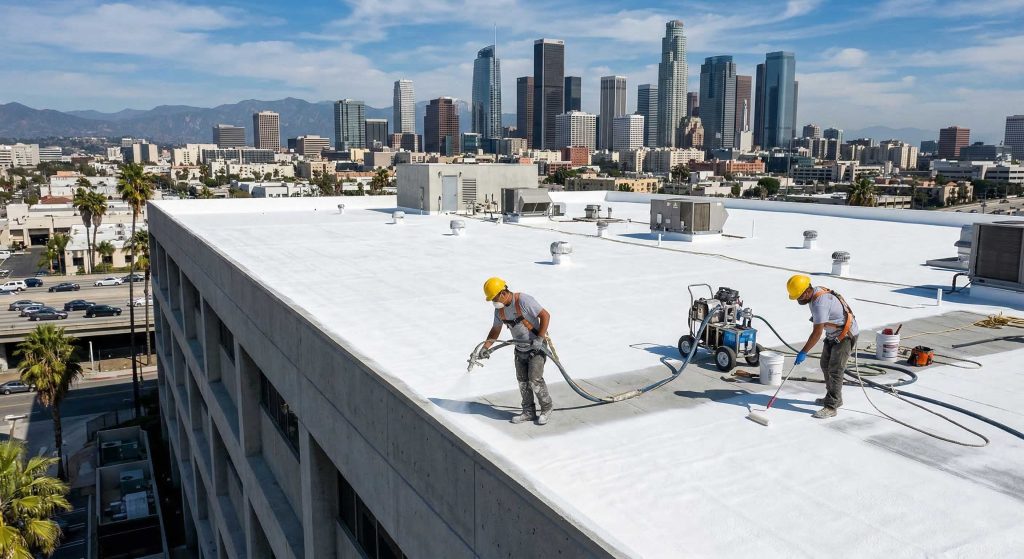
Is Overspray a Safety Risk During Installation or Repair?
Overspray is a legitimate concern, especially in Los Angeles neighborhoods where nearby cars, adjacent buildings, storefront glass, landscaping, and pedestrian areas may be close to the work zone. Spray application must be controlled carefully because wind can carry particles beyond the roof if the project is not managed properly.
That does not make spray foam roofing unsafe. It means the contractor needs to take site conditions seriously. Wind direction, wind speed, masking, staging, protective measures, and job sequencing all matter. Overspray control should be part of the plan from the start, not an afterthought discussed after the equipment is already on the roof.
Property owners should be cautious of any proposal that treats overspray as trivial. On a properly run project, this issue is anticipated and managed. On a poorly run one, it can create avoidable damage to surrounding property.
Can Spray Foam Roofs Handle Ponding Water?
Ponding water should never be brushed aside just because a roof is flat. If water remains on the roof long after rain, it usually points to a drainage issue that deserves attention. Persistent standing water can accelerate coating wear, hold dirt and debris in place, and place extra stress on vulnerable areas of the system.
Spray foam roofing does offer an advantage here because the material can be applied in a way that helps improve slope in selected low areas. That means a repair or restoration strategy can sometimes address minor drainage problems while also restoring the roof surface. Still, a foam roof should not be expected to perform indefinitely with chronic ponding left unresolved.
The issue is not only the water itself. Long-term ponding often signals that the roof needs corrective work, whether that means improving drainage, restoring worn areas, or repairing low spots before leaks begin.
Does Spray Foam Roofing Help With Title 24 and Cool Roof Requirements?
This is one of the most relevant questions for Southern California properties. In many cases, spray foam roofing can be paired with reflective coatings that support cool roof performance, but the answer depends on the building type, roof slope, and project scope.
California compliance is tied to measured roof surface values, not just whether the coating looks bright white. For that reason, contractors and owners often verify products through the CRRC rated roof products directory, which is used to identify listed roofing materials and their rated surface properties. California’s energy forms also reference the CRRC product ID when a cool roof is installed, which shows how important proper product selection is for code-related roofing work.
For owners, the practical takeaway is simple. Do not assume every white coating automatically satisfies the requirements that may apply to the project. Ask which product is being proposed, whether it is properly rated, and how it fits the specific building and scope of work.
What Is the Difference Between Reflectance, Emittance, and SRI?
These terms are common in California roofing conversations, and they affect how a roof performs in the sun.
Solar reflectance refers to how much sunlight the roof surface reflects away. Higher reflectance usually means less solar heat is absorbed.
Thermal emittance refers to how efficiently the roof releases absorbed heat. A surface may reflect sunlight well, but emittance still matters because it helps the roof shed heat after it warms up.
Solar Reflectance Index, or SRI, combines those properties into a single comparative measure. For property owners, the important point is that these values help determine how hot a roof becomes in service and may also affect whether the product fits project requirements under applicable California standards.

What Do Spray Foam Roof Warranties Usually Cover?
Warranty terms vary widely, so owners should read them carefully rather than relying on a short verbal summary. Some warranties cover materials only. Others include workmanship coverage from the contractor. Some are limited by maintenance requirements, inspection frequency, drainage conditions, or exclusions related to foot traffic, storm damage, or unauthorized rooftop work.
One of the most important questions is whether the warranty requires regular upkeep to remain valid. Another is whether the roof can remain under coverage after future recoating, assuming the maintenance schedule is followed correctly. These details matter because a warranty is only valuable when the owner understands what keeps it in force and what can void it.
A strong warranty does not replace maintenance. It works alongside maintenance.
Is a Foam Roof Repairable, or Does Damage Mean Replacement?
Many spray foam roofs can be repaired effectively when the problem is found early. Localized punctures, coating wear, small leak entry points, flashing issues, and isolated low areas can often be addressed without moving straight to a full replacement. That is one of the practical advantages of the system.
The decision depends on condition, not just age. If the roof is badly neglected, broadly saturated, or failing across large sections, a more extensive solution may be required. But in many cases, targeted foam roof repair restores protection, stops moisture intrusion, and extends service life without the disruption of a larger tear-off project.
This is why inspection matters so much. A roof that looks tired may still be a strong repair candidate. A roof that looks acceptable from the ground may already have developing trouble spots that need prompt work.
Conclusion
Spray foam roofs can perform exceptionally well in Los Angeles, but they do not perform well by accident. Strong UV exposure, coating wear, drain issues, rooftop traffic, and delayed maintenance all shape how long the system stays watertight and energy-efficient. The most important questions usually lead back to the same practical answer: inspect the roof before small warning signs turn into deeper damage. If your roof has exposed foam, worn coating, standing water, minor leaks, or areas that no longer look uniform, schedule a professional inspection and find out whether Foam Roof Repair is the right solution to restore protection, stop active trouble spots, and extend the life of your existing roof before the damage spreads.
Read also our blog: An Overview of Spray Foam Roofing Systems and Their Benefits
FAQ
How long does a spray foam roof last in Southern California?
A spray foam roof can last for decades when the foam stays protected by a properly maintained coating system. Lifespan depends on sun exposure, drainage, maintenance history, roof traffic, and how quickly repairs are made when wear first appears.
Does a foam roof always need full replacement when it starts leaking?
No. Many foam roofs can be repaired when the problem is localized and the overall system is still in serviceable condition. Early inspection is what determines whether targeted repair is still a practical option.
When should a spray foam roof inspection be scheduled?
An inspection should be scheduled when there is visible coating wear, exposed foam, recurring ponding water, storm-related concerns, interior water staining, or simply uncertainty about the roof’s condition. Regular inspections are also useful for planning maintenance before leak problems begin.
Mail us for information
Emergency Phone