
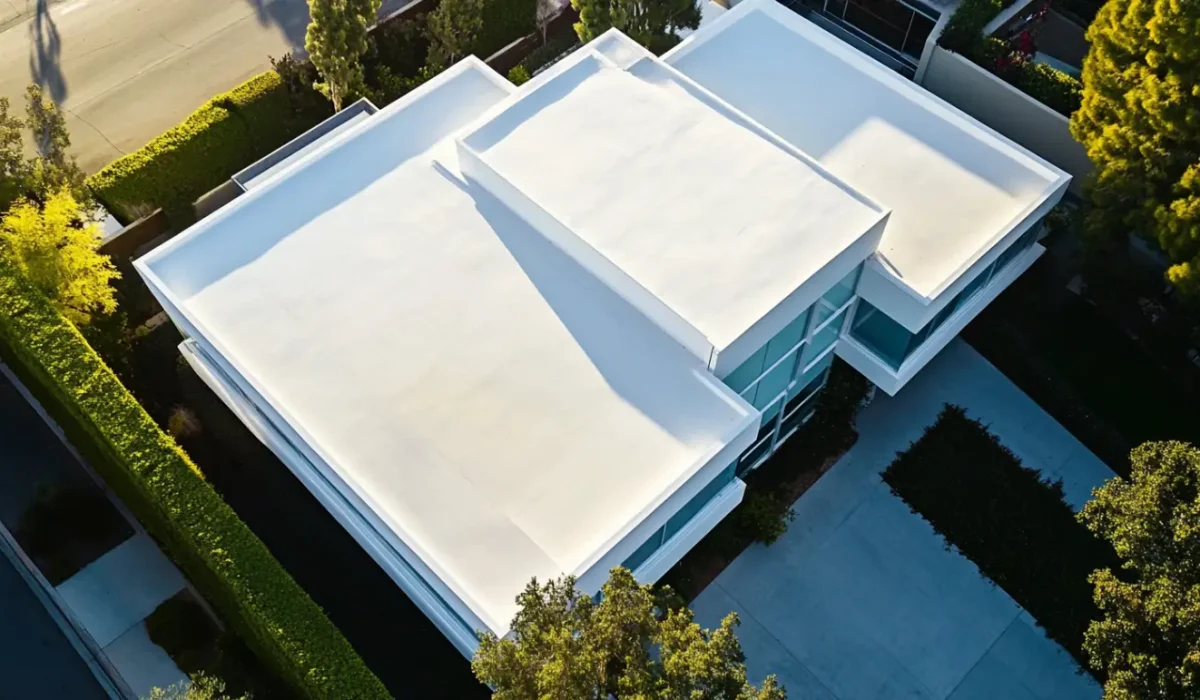
For commercial property owners and facility managers in Southern California, roofing decisions affect leak risk, operating costs, service life, and capital planning. At Foam Roofing Los Angeles, we frequently encounter the same objections to Spray Polyurethane Foam (SPF) roofing: it melts in the heat, UV radiation destroys it, ponding water makes it fail, overspray makes it too risky for urban areas, and the foam cannot meet commercial fire requirements. Most of these claims mix a narrow fact with a broader conclusion that simply does not hold up when the full roof system is evaluated. Commercial SPF is a closed-cell, thermosetting roofing material installed as part of a heavily coated, engineered roof assembly—not an exposed piece of packaging foam sitting unprotected in the sun.
To protect your capital investment, it is critical to separate engineered facts from industry fiction. Here is a technical breakdown of the most common foam roofing myths that circulate in the commercial real estate space.
Why Commercial SPF Gets Misjudged
SPF often gets compared to the wrong materials. Commercial roofing SPF is not soft, open-cell wall insulation, and it is not a heat-softened plastic sheet. Roofing spray foams are rigid, closed-cell materials manufactured to a density of 2.5 to 3.0 lb/ft³, delivering an R-value of 5.8 to 6.9 per inch, with a compressive strength that typically exceeds 40 PSI. Those are heavy-duty structural properties designed to withstand commercial environments, harsh weather, and rooftop foot traffic.
Contact Us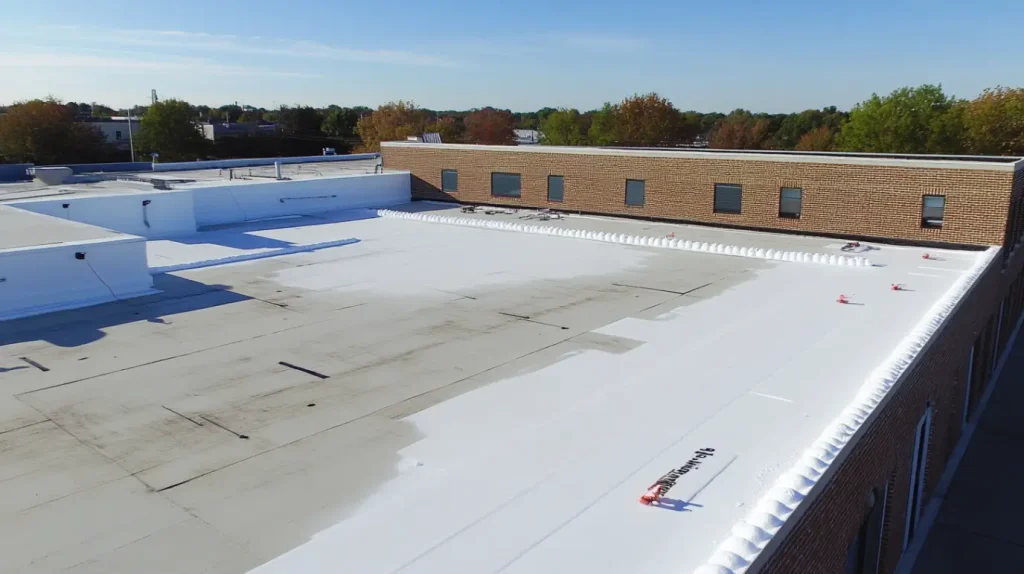
Myth #1: “Spray Foam Melts in the Los Angeles Heat”
This is one of the most persistent objections, and it comes from confusing thermoset foam with thermoplastic materials. The difference is rooted in basic chemistry.
Thermoplastic materials (like single-ply TPO or PVC membranes) soften when reheated, which is why their seams are heat-welded during installation. Thermoset materials do not behave that way. Because SPF is a thermosetting plastic, it undergoes an irreversible chemical cross-linking process during application. Once it cures, it cannot melt, soften, or off-gas under extreme ambient temperatures.
Instead of melting, SPF dramatically improves a building’s thermal performance. By providing high thermal resistance across the entire roof deck, it actively blocks heat transfer and reduces the HVAC cooling load, which is exactly why it is utilized so frequently in hot climates.
Myth #2: “Ultraviolet (UV) Radiation Destroys Foam Roofs”
This myth contains one partial truth and one entirely wrong conclusion.
The partial truth is that unprotected raw polyurethane foam will degrade—a process called chalking—under prolonged exposure to UV radiation. The wrong conclusion is that SPF roofs therefore lack longevity. A commercial SPF roof is never meant to remain unprotected.
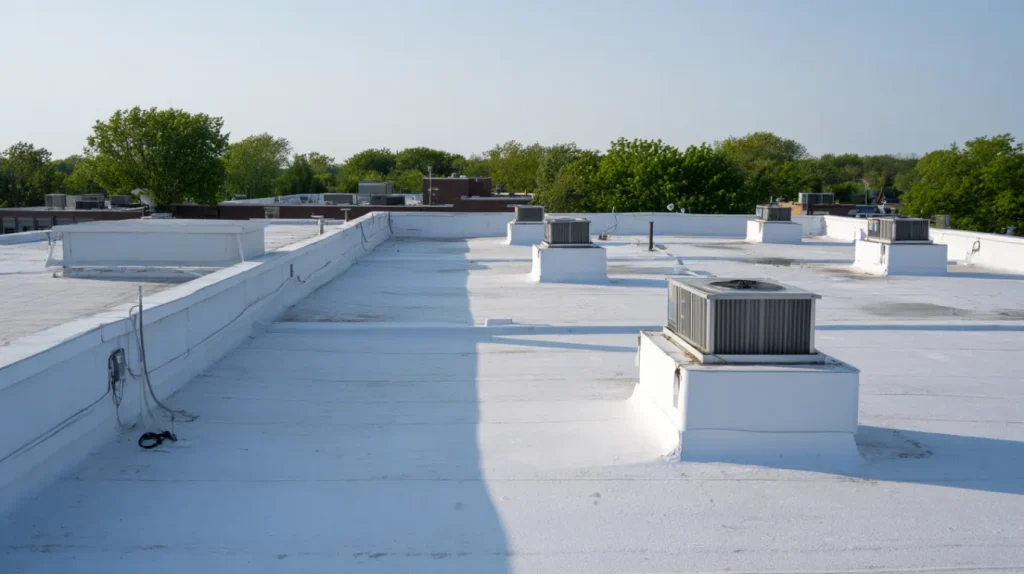
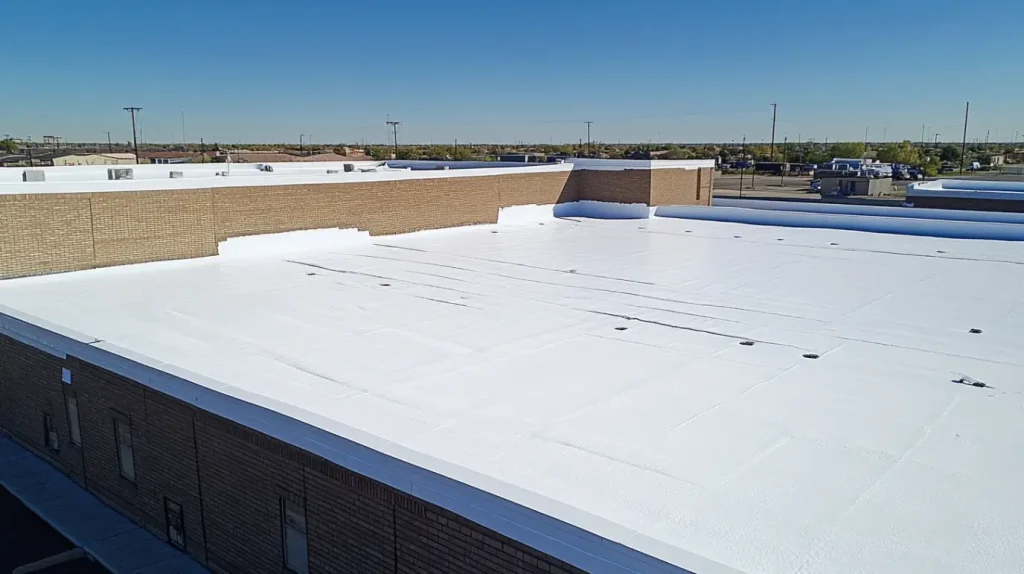
The foam serves as the seamless waterproofing and insulation core, while an elastomeric topcoat provides the exterior weathering surface. In commercial applications, a premium high-solids silicone coating is applied over the foam to a specific dry film thickness (DFT), typically 20 to 30 mils. This reflective silicone layer acts as an absolute UV shield. As long as this protective coating is maintained and periodically renewed, the UV rays never reach the foam, allowing the underlying SPF system to remain protected for decades when the coating is properly maintained and renewed as needed.
Myth #3: “Ponding Water Makes SPF a Bad Flat Roof System”
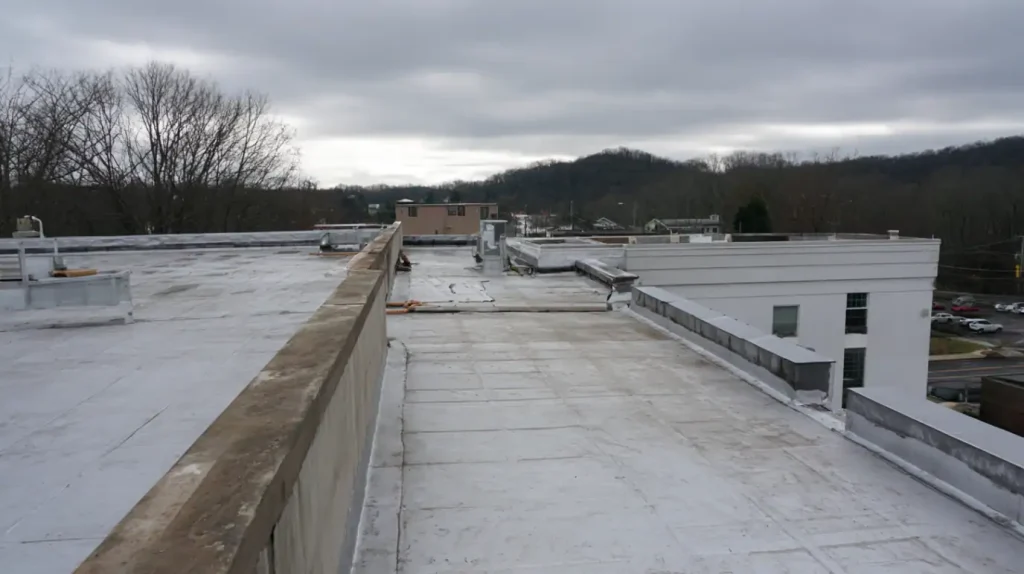
This objection sounds persuasive because standing water degrades many traditional flat roofs. However, assuming that ponding water automatically disqualifies SPF demonstrates a misunderstanding of closed-cell foam and fluid-applied roofing.
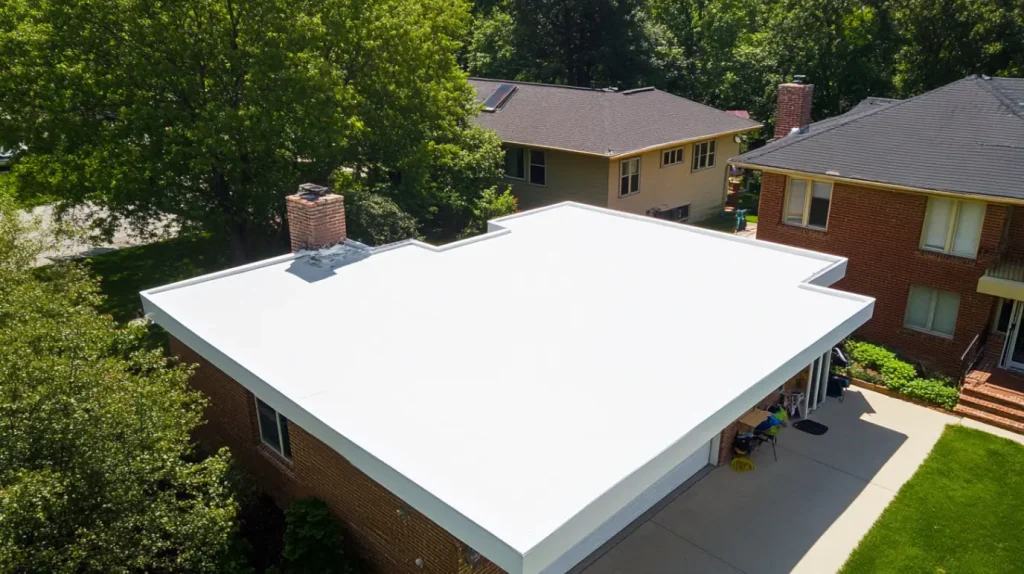
First, the closed-cell structure of roofing foam makes it inherently impermeable; it does not absorb water like a sponge. Second, SPF is actually utilized to correct ponding water issues rather than merely covering them. Because the foam is spray-applied, installation thickness can be deliberately varied to engineer custom slope-to-drain contours. Low depressions on the roof deck are built up with thicker foam passes to direct water flow precisely toward drains and scuppers. Coupled with a moisture-cured silicone topcoat that remains stable under hydrostatic pressure, an SPF system can be used to improve drainage and reduce chronic ponding when the roof is a suitable candidate and the slope correction is engineered correctly.
Myth #4: “The Overspray Risk is Too High for Urban Environments”
Overspray is a legitimate installation hazard. Claiming that it makes SPF inherently unsuitable for dense commercial properties, however, confuses a contractor-control issue with a material flaw.
Overspray risk is managed through disciplined site planning, masking, containment, weather monitoring, and stop-work thresholds. In dense commercial zones near storefronts, parked vehicles, and active HVAC intakes, rigorous application standards must be followed. Contractors performing this work should operate strictly in line with Spray Polyurethane Foam Alliance (SPFA) application guidelines, which dictate the use of physical windscreens, localized spray tents, and strict wind-speed limits. When an installation is executed with the proper environmental controls, the overspray risk is effectively mitigated.
Myth #5: “SPF Cannot Meet Commercial Fire Requirements”
This myth usually starts with a simple assumption: foam is a plastic, plastics are combustible, therefore it must be unsafe on a commercial roof.
The building code does not evaluate materials in a vacuum; it evaluates whether the complete roof assembly achieves the required fire classification. Properly specified SPF roof assemblies can meet Class A fire-rating requirements when tested as complete code-compliant systems. When tested under standards like the UL 790 fire classification, a properly coated SPF roofing assembly achieves a Class A fire rating. This means the system is highly effective against severe fire exposure, prevents the spread of flames across the roof deck, and complies with strict commercial building codes.
Myth #6: “SPF Roofs Are Too Fragile for Service Traffic”
Commercial roofs must handle routine maintenance access. HVAC technicians, electricians, and plumbers will walk on the surface. The idea that SPF is a delicate material that will shatter or compress underfoot does not align with its physical properties.
With a compressive strength of 40 to 50 PSI, medium-density commercial SPF easily supports the weight of maintenance crews and standard rolling equipment. To provide additional protection in high-traffic zones—such as the areas immediately surrounding mechanical units and roof hatches—ceramic roofing granules are typically broadcast into the top layer of the silicone coating. This creates a hard, abrasive, non-slip service walkway that protects the system from dropped tools and heavy foot traffic.
Conclusion
Most foam roofing myths fall apart the moment SPF is evaluated as a complete, engineered commercial roof assembly rather than an isolated piece of plastic. It does not melt in the Los Angeles heat. UV radiation does not destroy a properly coated system. Ponding water is actively corrected through slope-to-drain application, and the system’s fire performance meets the strictest Class A building codes. When commercial property owners look past the misconceptions and focus on the data, SPF stands out as a highly durable, energy-efficient, and leak-resistant low-slope roofing solution.
Read More: A Step-by-Step Guide to Installing SPF Roofing Systems
Frequently Asked Questions
Does SPF roofing hold up in extreme heat?
Yes. Commercial roofing SPF is a thermosetting plastic, meaning it cures irreversibly and will not melt or soften in high temperatures. Because it delivers an R-value of 5.8 to 6.9 per inch, it provides excellent thermal resistance, actively reducing the amount of heat that enters the building.
Is ponding water a deal-breaker for an SPF installation?
No. While ponding water is a serious issue for many roof systems, SPF is uniquely equipped to solve it. During application, the foam can be sprayed thicker in low spots to create a positive slope, which actively directs water toward drains and scuppers to eliminate chronic standing water.
Can an SPF roof meet commercial fire safety requirements?
Absolutely. When installed correctly and protected with specified elastomeric topcoats, an SPF roofing assembly achieves a Class A fire rating under rigorous UL 790 testing standards. This ensures the roof is highly resistant to severe external fire exposure and meets strict commercial building regulations.
Mail us for information
Emergency Phone