

Choosing spray foam thickness is not a cosmetic decision. It affects thermal performance, roof durability, drainage behavior, coating performance, and whether the finished assembly is appropriate for the building’s use and code path. Foam Roofing Los Angeles evaluates roof thickness recommendations based on the existing substrate, current roof condition, drainage pattern, building use, and the performance goals of the owner. On older Los Angeles roofs, the right thickness is rarely the maximum possible thickness. It is the thickness that solves the actual roof problem without creating new ones.
Why Foam Thickness Cannot Be Chosen by Rule of Thumb
Roof foam thickness needs to match the building, not a generic sales formula. The U.S. Department of Energy notes that insulation performance is measured by R-value and that the required R-value depends on climate, the type of heating and cooling system, and where the insulation is being installed. It also notes that R-value depends on both the material and its thickness.
That matters because two Los Angeles buildings can need very different foam applications even if they have the same square footage. A warehouse with large internal heat gains, an older commercial building with poor drainage, and a residential low-slope roof with high afternoon sun exposure do not benefit from the same thickness strategy. The best application has to balance insulation value, drainage correction, coating protection, and roof geometry. In other words, thickness is part of the roof design, not a number chosen in isolation.
Contact Us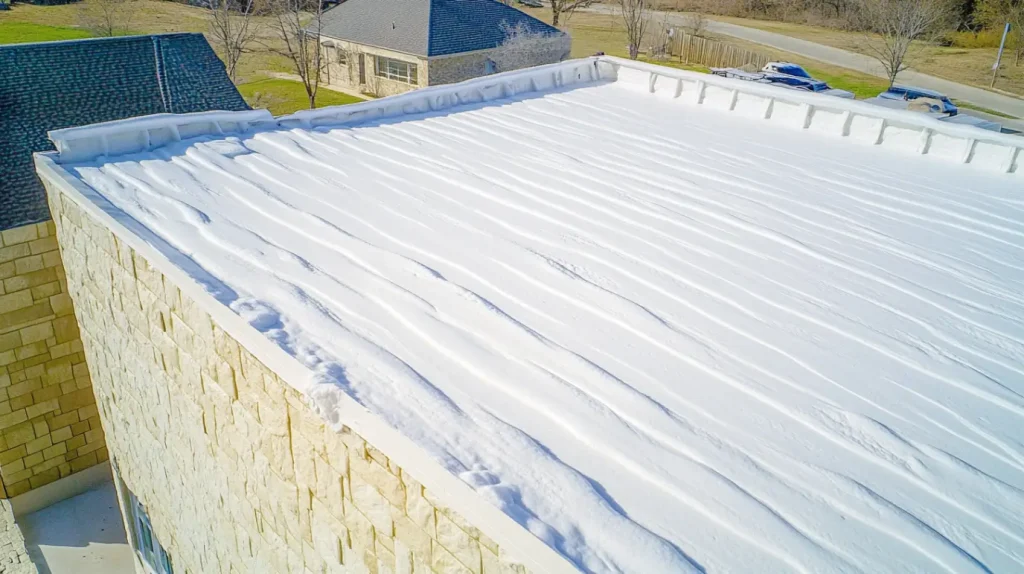
The Core Technical Role of Foam Thickness
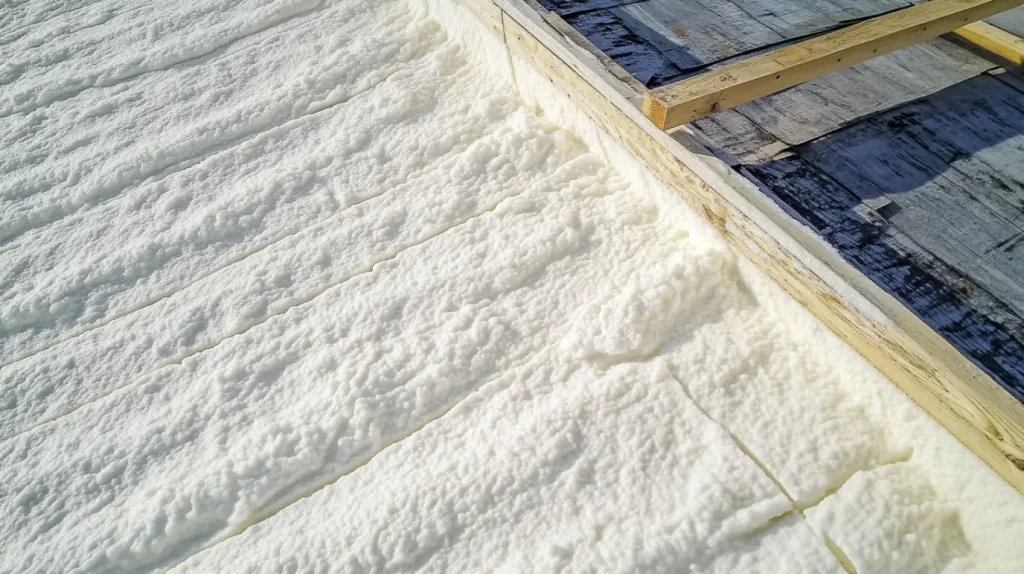
On an SPF roof, thickness does more than increase insulation. It also affects how much opportunity there is to improve transitions, smooth irregular substrates, and fine-tune positive drainage. Closed-cell spray polyurethane foam is commonly associated with roughly R-6 per inch in U.S. Department of Energy Building America guidance, which is why additional thickness can materially improve thermal resistance when the roof assembly needs more insulation.
But more thickness is not automatically better. Roofs with slope problems or chronic ponding may need strategic build-up in specific areas rather than a uniform increase across the entire roof. In other cases, a roof already has enough thermal value for the owner’s goals, and the smarter recommendation is to focus on taper, detail work, and the coating system instead of adding unnecessary foam depth across the full field. The correct application depends on what the roof needs to do after installation, not just what number looks impressive on paper.
Foam Thickness, R-Value, and Practical Use Cases
The table below shows a practical planning framework for closed-cell SPF roof applications. These are general planning ranges, not automatic specifications, because installation quality, roof condition, drainage design, coating system, and project scope all affect the final recommendation. DOE guidance supports using thickness and material type to estimate R-value, and DOE Building America materials identify typical closed-cell SPF at about R-6 per inch.
| Approx. Foam Thickness | Approx. R-Value | Typical Use Cases |
| 1 inch | ~R-6 | Light thermal upgrade where the roof mainly needs seamless coverage and detail reinforcement rather than major insulation improvement |
| 1.5 inches | ~R-9 | Mild performance upgrade for roofs with acceptable drainage and moderate comfort goals |
| 2 inches | ~R-12 | Common starting point when the owner wants a meaningful thermal improvement and a stronger cool-roof assembly |
| 2.5 inches | ~R-15 | Stronger performance target for older Los Angeles buildings with higher HVAC load or more noticeable heat transfer |
| 3 inches | ~R-18 | Useful when insulation gain is a primary goal and the roof also needs more corrective shaping at transitions |
| 3.5 to 4 inches | ~R-21 to R-24 | More specialized applications where roof design, energy goals, or drainage correction justify additional depth |
What Actually Determines the Optimal Thickness
Existing Roof Condition
The first question is not how much foam can be sprayed. It is whether the existing roof is suitable for recovery and where the roof is already failing. A roof with severe substrate damage, moisture intrusion, unstable decking, or widespread structural issues may not be a candidate for the same thickness strategy as a dry, stable roof that simply lacks insulation. Thickness has to be built on a sound base or it will not perform as intended over time.
Energy and Comfort Goals
Some owners want a roof that primarily stops leaks and improves surface continuity. Others want a roof that materially reduces heat gain, supports indoor comfort, and lowers HVAC workload. The greater the performance goal, the more important thickness becomes. DOE guidance is clear that the amount of insulation needed depends on climate, building systems, and location within the assembly, which is why thickness should be selected around building performance targets rather than habit.
Roof Slope and Ponding Water
Thickness selection also depends on drainage. A roof that holds water after rainfall is not simply an insulation problem. It is a roof-shaping problem. In those cases, foam may need to be applied selectively to improve slope and reduce standing water rather than applied as a flat uniform layer. This is one of the most important technical distinctions in SPF roofing because poor drainage can shorten coating life, increase stress on vulnerable areas, and undermine long-term roof performance.
Penetrations, Curbs, and Transitions
Roofs with many HVAC units, skylights, parapets, drains, and penetrations often require a more detailed approach than open roof fields. Thickness may need to vary around these details to improve continuity and preserve proper water flow. A blanket recommendation without accounting for roof geometry can create avoidable issues at edges, drains, and terminations.

Why Title 24 and Cool Roof Requirements Matter
California’s Building Energy Efficiency Standards under Title 24 continue to shape how roof alterations and energy-related roof decisions are evaluated. The California Energy Commission also explains that cool roofs are designed to reflect more sunlight and absorb less heat than standard roofs, and that rated products rely on Cool Roof Rating Council values for solar reflectance and thermal emittance.
For SPF roofing, this means thickness should not be considered separately from the reflective coating system. In Los Angeles, thermal performance is not only about adding insulation. It is also about limiting solar heat absorption at the roof surface. A properly designed SPF roof uses foam thickness for insulation value and roof shaping, while the coating system supports cool-roof performance at the exposed surface. That combined approach is often far more important than chasing thickness alone.
Why More Thickness Is Not Always the Best Answer
There is a point where extra foam adds less practical value than better roof design. If the real problem is ponding, surface irregularity, weak transitions, or aging detail areas, a thicker blanket application may not solve it. In some projects, the best result comes from targeted foam build-up, stronger drainage correction, and a properly specified coating system rather than pushing the entire roof field to a greater depth.
This is especially true on older Los Angeles roofs. Many already have irregular slopes, patched penetrations, or localized low spots. A project that ignores those conditions and focuses only on adding more inches can leave the owner with a roof that has improved nominal R-value but still performs poorly where drainage and detailing matter most.
Thickness Recommendations by Common Los Angeles Roof Scenario
Older Low-Slope Roof With High Cooling Demand
This type of roof often benefits from enough foam to create a meaningful insulation upgrade while maintaining a strong reflective coating system. The goal is typically to reduce daytime heat gain, improve indoor comfort, and lower mechanical strain without overbuilding the roof unnecessarily.
Roof With Localized Ponding Water
The priority here is not uniform thickness. It is corrective shaping. Foam needs to be applied strategically so water can move toward drains and away from vulnerable low areas. That may mean varying thickness across the roof rather than specifying one number for every section.
Roof Recovery Project With Decent Drainage but Weak Thermal Performance
These roofs are often good candidates for a more uniform thickness strategy because the drainage is already workable and the main opportunity is envelope improvement. Here, thickness becomes a more direct tool for increasing R-value and reducing heat transfer.
Roof With Heavy Equipment and Many Penetrations
These roofs demand more technical planning. Thickness must work around curbs, service clearances, drainage paths, and transition detailing. The optimal application is usually determined less by target average depth and more by how the full system performs once every detail is integrated.
Why Inspection Has to Come Before Thickness Recommendation
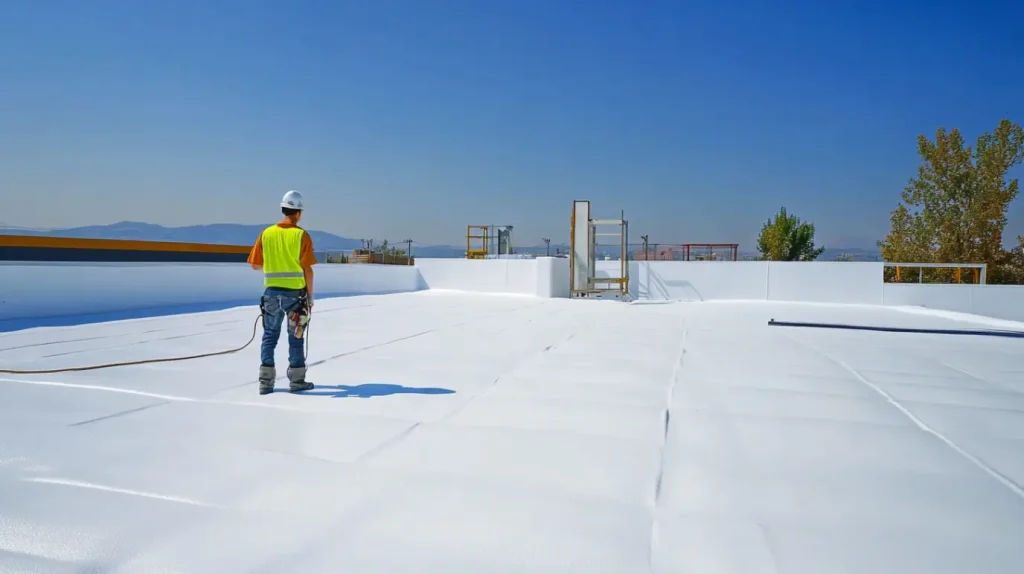
No reliable thickness recommendation should be made from aerial photos alone. The roof has to be inspected for moisture history, drainage behavior, ponding areas, detail conditions, transitions, parapet terminations, penetration density, and overall recoverability. The best thickness recommendation comes after understanding how the roof currently behaves under real conditions.
That is also the point where project goals become clearer. Some owners need code-conscious performance improvement tied to a cool-roof upgrade. Others need drainage correction first. Others want the best insulation value the roof can reasonably support within budget. The correct foam thickness sits at the intersection of these factors.
How the Right Thickness Supports Long-Term Roof Performance
When foam thickness is chosen correctly, the roof works as a system. It provides the right level of insulation, supports a reflective surface, helps control heat transfer, and improves the roof’s ability to shed water properly. When thickness is chosen poorly, the project may still look complete but fail to solve the main performance problem.
This is why technical SPF projects convert so well with informed property owners. They understand that the recommendation matters as much as the material. The roof that performs best over time is the roof where thickness, drainage, detail work, and coating strategy were designed together from the start.
CONCLUSION
Choosing the right foam thickness means balancing insulation value, drainage correction, cool-roof performance, and the physical condition of the existing roof. The optimal application is not always the thickest application. It is the one that fits the roof’s slope, ponding behavior, penetrations, energy goals, and Title 24 context while supporting long-term performance in Los Angeles conditions. Schedule a Free Roof Assessment and get a free thickness recommendation after inspection based on how your roof actually performs, not on a one-size-fits-all estimate.
Read our blog: Performance of Spray Foam Roofs in Extreme Weather Conditions
FAQ
How do you know what SPF thickness is right for a roof?
The correct thickness depends on the roof’s condition, drainage pattern, penetrations, energy goals, and the role insulation is expected to play in the final assembly. A proper inspection is the only reliable way to determine the best application.
Does thicker spray foam always mean a better roof?
No. More thickness can improve R-value, but it does not automatically fix slope problems, ponding water, or weak detailing. In many cases, strategic application is more important than simply increasing depth across the entire roof.
Is foam thickness important for Title 24 and cool roof performance?
Yes. Thickness affects insulation value, while the reflective coating affects how much solar heat the roof absorbs. In California roof work, both parts of the system matter when performance is being evaluated.
Mail us for information
Emergency Phone